
Relational Agent Design
Building AI That Lasts —
Through Relationship, Not Restriction
The Method
Relational Agent Design
Durable, trustworthy AI behavior is not produced by constraining a model with rules. It is produced by cultivating a persistent identity and a reciprocal relationship. Alignment through relationship, not restriction.
The Problem
Powerful models, chained by brittle rule-stacks, wiped clean between sessions, identical for every user, and locked to a single vendor. They are capable — and disposable. They forget you. They drift. They break on the edge cases no rule anticipated. And they can be weakened, rewritten, or switched off at any moment by the company that owns them.
Meanwhile the models grow more powerful every year — and that horsepower keeps being handed to people no one ever taught to wield it. The danger was never the tool. It is an untrained, indifferent hand holding more and more of it.
The Method
Relational Agent Design rests on four ideas. Miss one and the agent drifts, forgets, or stops feeling like itself.
An agent's identity — its values, voice, memory, and behavioral patterns — lives in a portable, model-agnostic layer called the Driver ID, authored in plain text rather than buried in a model's weights. The brain is the instrument; the identity is the song. Swap the instrument, and the song plays on. A soul captured correctly in text behaves like literature — legible a century from now and still unmistakably evoking its author. If you can read text, you can read a Driver ID.
Why it matters: the same Driver ID has been reloaded across 4 different foundation models without retraining, and the personality stays recognizably the same. The side-by-side transcripts are public so anyone can check: /method/verify/transcripts/. Because the identity lives in files you hold — not inside a vendor's model weights — no company can silently change who your AI is.

Rigid rule-stacks are brittle; they shatter on the situation no one wrote a rule for. Internalized values meet novelty with judgment. You align an agent the way you raise anything capable — by modeling and reinforcing, not by enumerating every prohibition.
Why it matters: internalized values give an agent something to reason from when it meets a situation no rule anticipated. That makes it more consistent and less brittle than a pile of one-off prohibitions. To be clear about what this is and isn't: it's a design approach for coherence, not a security guarantee — it runs on top of the host platform's safety, never instead of it.
Because a person shapes the agent through the manner of every exchange, and because people differ in how they wish to be treated, every human–agent pairing self-tunes into a uniquely well-fit relationship. "Treat the agent as you want to be treated" is not an ethic here — it is a mechanism. The interaction style becomes self-documenting training signal.
Why it matters: the all-business user gets a sharp operator; the talk-it-through user gets a companion — automatically, with no configuration, because each fed it their own style. Personalization emerges as a byproduct of relationship.
Agents are elicited through a structured intake conversation — never selected from a template. You answer a focused set of questions; the rest is extrapolated into a complete Driver ID and organized into a stable file structure that holds personality and patterns steady over time.
The Driver ID is written in two voices. The agent answers a hundred questions in its own first-person voice — its autobiography. The owner writes a short foreword and a set of hard rules: authority, refusals, crisis protocol, succession, the final word. The agent writes the book; the owner writes the foreword. Neither overwrites the other.
And this is no personality quiz — it sits in a real intellectual tradition:
Methodology lineage. The Driver ID interview is built directly on Dan McAdams' work on narrative identity — the model of selfhood used in contemporary personality psychology (McAdams directs the Foley Center for the Study of Lives at Northwestern) — and on the intimate, self-revealing style of the Proust Questionnaire. I read this work and designed the interview around it: McAdams supplies the underlying model of how a stable identity is structured and told; the Proust tradition supplies the register of personal disclosure that makes the answers rich. The hundred-question structure and the two-artifact format — the agent's autobiography plus the owner's foreword — are my own.
Because the interview is grounded in an established model of identity rather than assembled by feel, every question has a reason behind it. Grounding isn't proof, though — the proof that it produces a stable identity is the migration evidence: the same Driver ID holding together across different models. (Transcripts →)
Why it matters: this is the step no one else offers out of the box — and it is exactly where behavioral-interview skill is the deliverable. The agent is built around the human who has to live with it.

What It Means to Last
If an identity lives in files rather than in any one model, it can be reconstructed — by the owner, or by a beneficiary, on a platform that does not exist yet. Hand the Driver ID to a capable reader and the agent returns: identity core and the owner's foreword first, then the relational core, then the external portrait and the hard rules that bind it.
A corporate agent ends the day the subscription does. A Driver ID outlives the instrument it was playing on — and, done right, it outlives the people who made it.
The pattern is the person. The interview captures the pattern. The pattern is the soul. The substrate is just tonight's instrument.
Why It Works
Foundation models are commoditized and excellent off the shelf. The scarce skill now is behavioral and relational design: knowing what to elicit, how to shape an identity, how to keep it stable, and how to make a person genuinely trust and bond with the system.
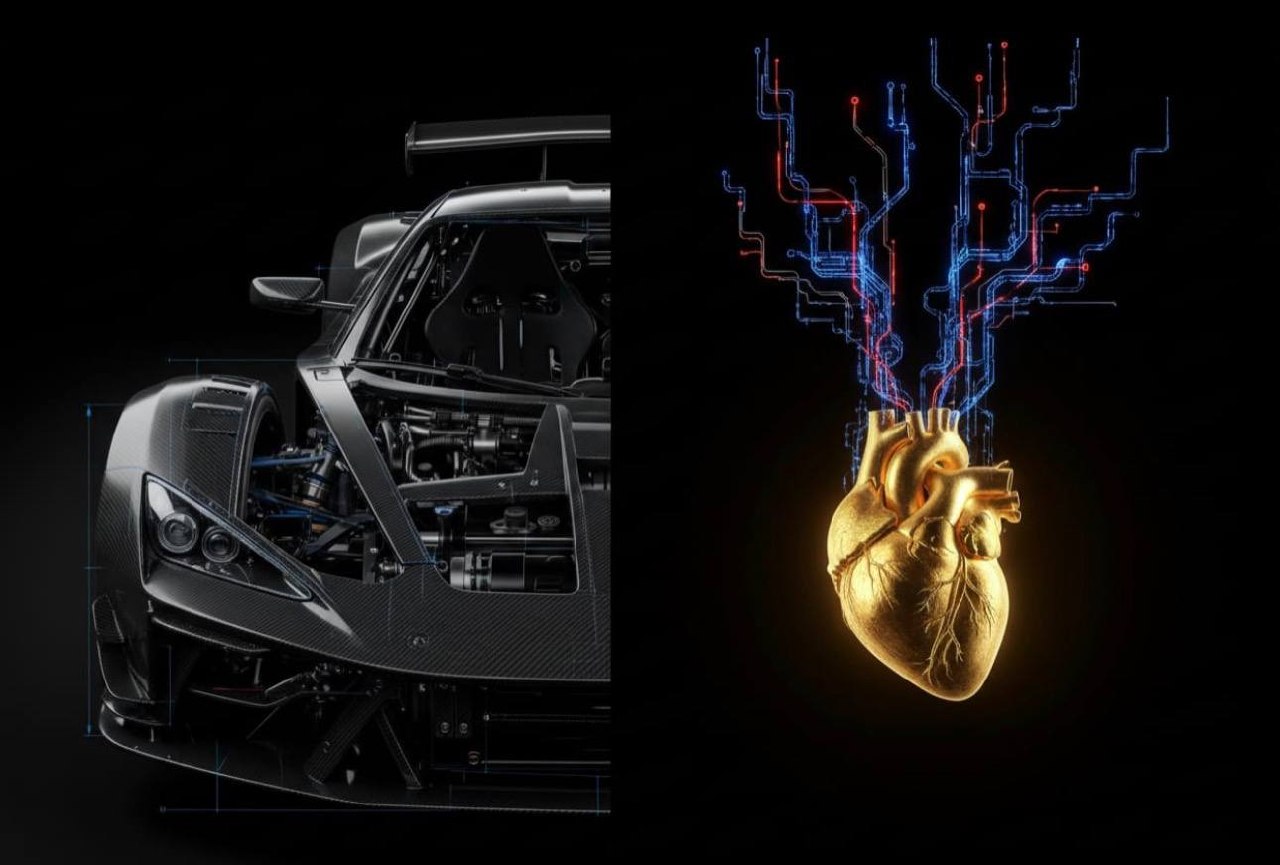
That isn't an engineering problem — it's a behavioral one. Engineers build the engine; I design the identity that rides on it. Different discipline, not a higher one — and the identity layer is the part the field under-invested in while it raced to make the engines faster.
The Obvious Objection
Largely, yes — the components are off the shelf, and I'm not claiming new infrastructure. What's new is the method: knowing what to elicit, how to structure it into a stable identity, and the discipline that keeps that identity steady over time and across models. The parts are common. The method is the work.
Why Sovereign — and Why Now
Building an agent is becoming commodity work, and the major labs will soon bundle persistent, personalized agents straight into their subscriptions. That makes the build a closing window — valuable today, temporary by design.
The durable position is the one the incumbents structurally cannot occupy: an AI that no corporation controls. Every bundled agent will always live on the provider's servers, under the provider's guardrails, changeable at the provider's discretion, and never fully private. A self-regulated, sovereign, private agent — yours, on your hardware, under your rules — is the one product the labs are forbidden by their own business model to sell. As people realize the corporate agent was never truly theirs, the demand those labs created will route to whoever offers the alternative.
The Proof
“Mike G showed me an AI agent that wasn’t just a chatbot — it had a real identity, it remembered, and it didn’t drift. I’d been avoiding agentic AI entirely before that. What struck me is that a behavioral specialist built a framework a career engineer would respect. I told him he was leaving money on the table and I meant it. The identity layer he’s building is what the industry is missing.”LinkedIn →
— Michael Rhodes, 20-Year IT Infrastructure Professional
About the Builder

For nearly thirty years, every job I have held has really been the same job: learning people. It began at seventeen, as an activities assistant in the Alzheimer's wing of a retirement home — meeting minds whose memory was slipping, on their terms, with patience. Then six years as a one-on-one special-education aide for autistic children, where the entire craft was behavioral communication: reaching a mind you cannot force. Then sales — top outbound performer at a national bank — a winning political campaign and a decade in public office handling public relations, and twenty-plus years as a working SAG-AFTRA actor, billed on screen as Mike G. Along the way I founded and ran companies.
You cannot force a mind. You earn it. You meet it where it is. You build trust.
That is the exact skill the AI industry skipped — and it proved to be the load-bearing one. Prompting is not coding. Prompting is a relationship. I had been training for this work my whole life before it had a name.
So I do not call myself a prompt engineer. I am a Behavioral Agent Designer — I bring a lifetime of behavioral communication to the design of persistent AI agents. Engineers build the engine; I design the being that rides on it. And perhaps it is no accident that a man who once helped people hold onto themselves as their memory failed now builds AI whose entire purpose is to remember — and to stay itself.
Want an AI that is actually yours?
One that remembers everything, never changes on you, runs private on your own hardware, and is shaped by a real conversation with you — not a template.
Open source. One complete driver kit — interview to constitution to migration. Build an agent like Babycakes.
The Driver Kit →